
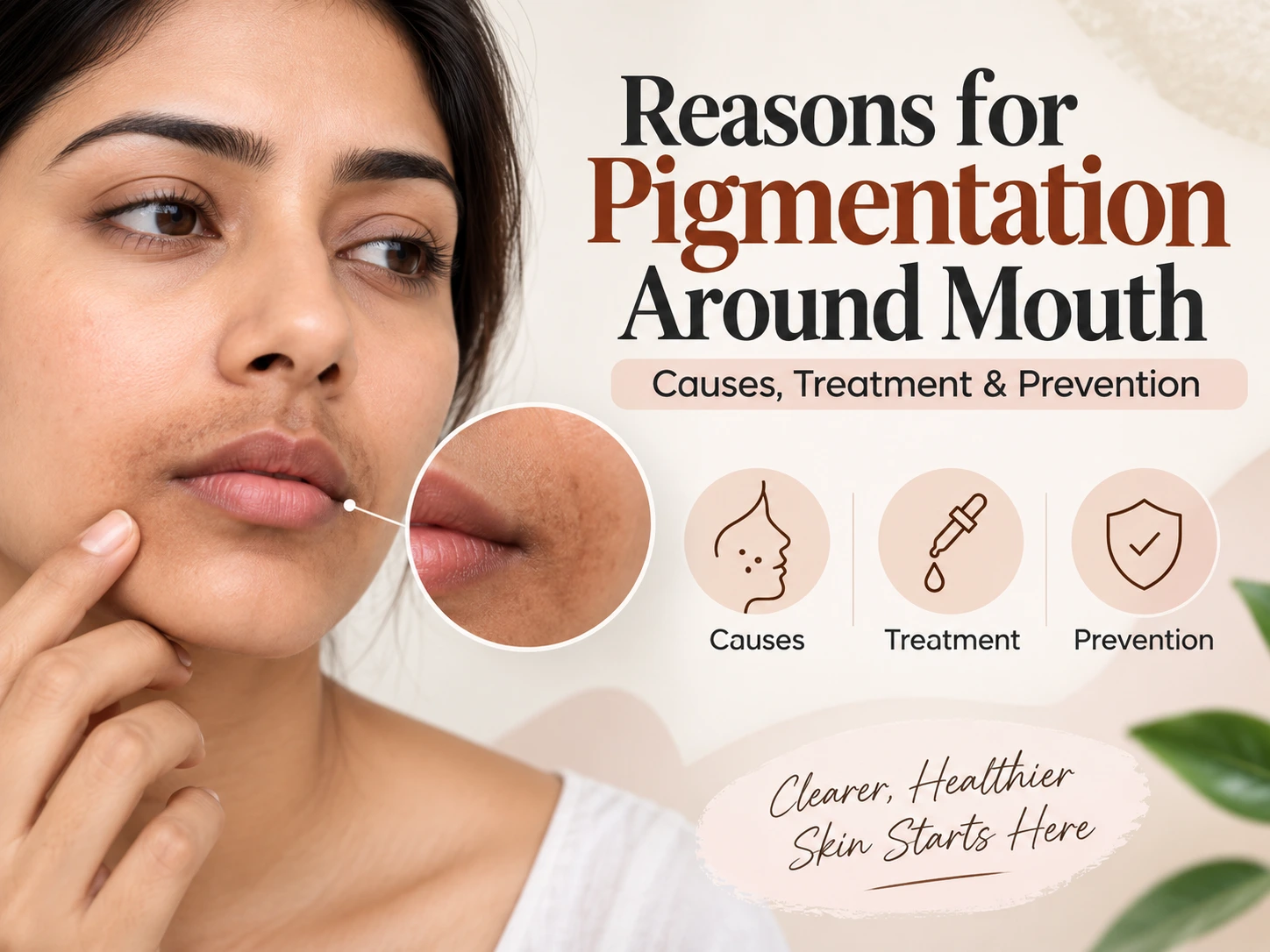
The main reasons for pigmentation around mouth include sun exposure, post-inflammatory hyperpigmentation, melasma, hormonal changes, skin irritation, contact dermatitis, lip licking, dryness, friction, and irritation caused by hair removal or skincare products. In some cases, nutritional deficiencies or an underlying skin condition may also contribute to darkening around the lips.
Pigmentation around the mouth can appear as a dark ring around the lips, brown patches around the corners of the mouth, a darker upper lip, or uneven skin tone between the mouth and surrounding facial skin.
Although this problem is usually not dangerous, persistent pigmentation can be difficult to treat if its underlying cause is not identified. Using random whitening creams, harsh scrubs, lemon juice, or strong exfoliating products can sometimes irritate the skin further and make pigmentation more noticeable.
Understanding why the skin around your mouth is getting darker is therefore the first step toward choosing the right treatment.
Quick Answer: Why Is the Skin Around My Mouth Dark?
The skin around your mouth may become dark because of sun exposure, inflammation, irritation, melasma, hormonal changes, lip licking, dryness, contact dermatitis, acne, or repeated friction. Hair removal methods such as waxing and threading can also trigger inflammation that leaves behind post-inflammatory hyperpigmentation.
The exact cause depends on the pigmentation pattern and whether you have other symptoms such as redness, itching, burning, dryness, scaling, acne, or a history of irritation.
What Are the Reasons for Pigmentation Around Mouth?
The most common reasons for pigmentation around mouth are:
- Sun exposure
- Post-inflammatory hyperpigmentation
- Melasma
- Lip licking
- Contact dermatitis
- Toothpaste irritation
- Skincare product irritation
- Dry skin and a damaged skin barrier
- Waxing and threading
- Friction
- Acne and skin inflammation
- Hormonal changes
- Certain nutritional deficiencies
- Over-exfoliation
- Genetic tendency and natural skin pigmentation
Several factors can occur together. For example, sun exposure may worsen pigmentation that originally developed after irritation from waxing or dermatitis.
1. Sun Exposure
Sun exposure is one of the most common reasons for pigmentation around mouth because ultraviolet radiation can stimulate melanin production and make existing pigmentation darker.
Melanin is the pigment responsible for skin colour. When the skin receives repeated UV exposure, melanocytes can produce more melanin as part of the skin’s protective response.
Over time, this can contribute to:
- Dark patches around the lips
- A darker upper lip
- Uneven skin tone
- Increased facial pigmentation
- Dark spots becoming more visible
- Worsening melasma
People who spend significant time outdoors without adequate sun protection may notice that their pigmentation becomes darker during periods of high sun exposure.
How to prevent sun-related pigmentation
Use a broad-spectrum sunscreen with SPF 30 or higher every day. Reapply it as appropriate when spending extended periods outdoors.
For people prone to melasma or hyperpigmentation, tinted sunscreen containing iron oxides may provide additional protection from visible light.
2. Post-Inflammatory Hyperpigmentation
Post-inflammatory hyperpigmentation, or PIH, occurs when the skin becomes darker after inflammation, irritation, or injury. It is a major cause of dark patches around the mouth.
The original skin problem may disappear while the pigmentation remains.
PIH can develop after:
- Acne
- Pimples
- Eczema
- Dermatitis
- Skin allergies
- Burns
- Cuts
- Excessive exfoliation
- Waxing
- Threading
- Shaving irritation
- Cosmetic procedures
This is particularly important because repeatedly irritating the skin while attempting to remove pigmentation can prolong the problem.
Example
A person may develop redness around the upper lip after waxing.
The redness disappears after several days, but the area remains brown or darker for weeks or months.
This is an example of how inflammation can result in post-inflammatory hyperpigmentation.
3. Melasma
Melasma is another possible reason for pigmentation around the mouth, particularly when brown or gray-brown patches appear on the upper lip and other areas of the face.
Melasma commonly affects areas such as:
- Upper lip
- Cheeks
- Forehead
- Nose
- Chin
The pigmentation may appear relatively symmetrical.
Sun exposure can worsen melasma, while hormonal factors can contribute to its development.
Hormonal changes associated with pregnancy and certain hormonal medications are recognized triggers.
However, not every dark patch around the mouth is melasma.
A dermatologist may need to examine the pigmentation pattern and medical history to determine the most likely diagnosis.
4. Lip Licking
Frequent lip licking can cause repeated irritation around the lips and may contribute to dark skin around the mouth.
When you repeatedly lick your lips, saliva repeatedly wets the surrounding skin. As saliva evaporates, it can contribute to dryness and irritation.
This may create a cycle:
Dry skin → lip licking → irritation → inflammation → pigmentation
If you have pigmentation together with dryness, redness, scaling, or irritation around the lips, habitual lip licking may be contributing to the problem.
Reducing lip licking and maintaining the skin barrier can help break this cycle.
5. Contact Dermatitis
Contact dermatitis can cause inflammation around the mouth, and the inflammation may subsequently leave behind pigmentation.
Contact dermatitis can occur when the skin reacts to an irritating or allergenic substance.
Possible triggers include:
- Cosmetics
- Lipsticks
- Lip balms
- Toothpaste
- Fragrances
- Skincare products
- Hair-removal products
- Certain topical medications
Symptoms may include:
- Redness
- Itching
- Burning
- Dryness
- Scaling
- Swelling
- Skin discoloration
If the pigmentation appeared after introducing a new product, contact dermatitis should be considered.
6. Toothpaste Irritation
Some people can develop irritation around the mouth from ingredients in toothpaste or oral-care products, and this inflammation can eventually leave pigmentation.
Toothpaste comes into frequent contact with the skin around the lips during brushing.
If you notice:
- Burning around the mouth
- Redness
- Dryness
- Itching
- Scaling
- Recurrent irritation
after brushing, discuss the possibility of contact irritation with a dermatologist.
Do not automatically assume that toothpaste is the cause, because several other skin conditions can produce similar symptoms.
7. Skincare Products
Irritating skincare products can contribute to pigmentation around the mouth by causing inflammation and damaging the skin barrier.
The skin around the mouth can be particularly sensitive.
Potential irritants include excessive use of:
- Exfoliating acids
- Retinoids
- Scrubs
- Strong cleansers
- Fragranced products
- Multiple active ingredients
- Strong pigmentation treatments
A common mistake is to assume that stronger products will remove pigmentation faster.
In reality, excessive irritation can cause inflammation and potentially make post-inflammatory hyperpigmentation more noticeable.
8. Dry Skin Around the Mouth
Dryness can contribute indirectly to pigmentation by making the skin more susceptible to irritation and inflammation.
Dry skin may result from:
- Cold weather
- Dry air
- Over-cleansing
- Hot water
- Harsh cleansers
- Excessive exfoliation
- Lip licking
- Retinoid irritation
- Inadequate moisturization
When the skin barrier becomes damaged, even ordinary products can start causing burning or irritation.
Maintaining adequate moisturization can therefore be an important part of managing pigmentation-prone skin.
9. Waxing and Threading
Waxing and threading can contribute to pigmentation around the upper lip when they repeatedly irritate or inflame the skin.
Hair removal may cause temporary:
- Redness
- Burning
- Sensitivity
- Small bumps
- Inflammation
If this happens repeatedly, the inflammation may result in post-inflammatory hyperpigmentation.
People who notice that their upper lip becomes darker after regular threading or waxing should consider whether the hair-removal method is irritating their skin.
10. Friction Around the Mouth
Repeated friction can irritate the skin and contribute to post-inflammatory hyperpigmentation.
Potential sources include:
- Face masks
- Frequent wiping
- Tissues
- Towels
- Aggressive cleansing
- Scrubbing
- Tight clothing
- Repeated rubbing
If pigmentation occurs in exactly the area that experiences repeated friction, reducing that mechanical irritation may help prevent further darkening.
11. Acne and Skin Inflammation
Acne, eczema, rashes, and other inflammatory skin conditions can leave dark marks around the mouth after the inflammation improves.
This is particularly common with post-inflammatory hyperpigmentation.
The process can look like:
Inflammation → skin healing → increased pigmentation → persistent dark patch
If the underlying acne or inflammatory condition continues, new pigmentation may keep developing.
Therefore, controlling the underlying skin condition is an important part of pigmentation treatment.
12. Hormonal Changes
Hormonal changes can contribute to pigmentation, particularly through conditions such as melasma.
Pigmentation may become more noticeable during:
- Pregnancy
- Certain hormonal treatments
- Use of some contraceptives
- Other hormonal changes
Hormonal pigmentation can occur together with sun exposure, making the pigmentation more persistent.
However, pigmentation around the mouth should not automatically be blamed on hormones without considering other causes.
13. Nutritional Deficiencies
Certain nutritional deficiencies have been associated with changes in skin pigmentation, but they are not the most common explanation for pigmentation around the mouth.
Vitamin B12 deficiency, for example, has been reported in association with hyperpigmentation.
However, you should not assume that you have a vitamin deficiency simply because you have dark skin around your mouth.
If pigmentation occurs together with other symptoms or there are medical reasons to suspect a deficiency, a doctor may decide whether blood tests are appropriate.
Avoid taking high-dose supplements without medical advice.
14. Over-Exfoliation
Over-exfoliating the skin around the mouth can cause irritation and may contribute to post-inflammatory pigmentation.
Using scrubs, acids or multiple exfoliating products too frequently can compromise the skin barrier.
Signs of over-exfoliation may include:
- Burning
- Stinging
- Redness
- Peeling
- Dryness
- Increased sensitivity
- Tightness
If these symptoms appear after increasing your skincare routine, reducing irritation may be more helpful than adding another pigmentation treatment.
15. Natural Skin Tone and Genetic Factors
Natural differences in skin tone can make the area around the mouth appear darker than surrounding facial skin without indicating a serious disease.
Genetics, skin type, natural melanin distribution and previous pigmentation can influence how visible discoloration becomes.
However, if the area has recently become significantly darker, a new cause should be considered.
How Do I Know What Is Causing My Pigmentation Around the Mouth?
The appearance of the pigmentation and what happened before it developed can provide important clues about the underlying cause.
| What you notice | Possible cause |
|---|---|
| Brown patches after acne or rash | Post-inflammatory hyperpigmentation |
| Burning or itching | Irritation or contact dermatitis |
| Dry, flaky skin | Barrier damage or dermatitis |
| Symmetrical brown patches | Possible melasma |
| Pigmentation after waxing | Hair-removal irritation |
| Pigmentation after threading | Post-inflammatory pigmentation |
| Frequent lip licking | Saliva-related irritation |
| Darkening after sunlight | UV-related pigmentation |
| Pigmentation after a new cosmetic | Product-related irritation |
| Persistent upper-lip pigmentation | Melasma or other causes |
This information can help identify patterns, but it does not replace a clinical examination.
What Is the Difference Between Melasma and Post-Inflammatory Hyperpigmentation?
Melasma usually presents as patterned brown or gray-brown patches, often symmetrically, whereas post-inflammatory hyperpigmentation develops at sites where previous inflammation or injury occurred.
Melasma
Often:
- Symmetrical
- Brown or gray-brown
- Located on sun-exposed facial areas
- Associated with sun exposure
- May involve the upper lip
- Can be influenced by hormones
Post-inflammatory hyperpigmentation
Often:
- Occurs where inflammation previously existed
- Follows acne, dermatitis or irritation
- Can follow waxing or threading
- May be irregular in shape
- Can gradually fade after the trigger is controlled
Because these conditions can overlap, professional assessment may be necessary.
How Can I Reduce Pigmentation Around My Mouth?
The first step is to identify and control the cause of pigmentation. Consistent sun protection, gentle skincare, moisturization, and avoiding repeated irritation can help prevent further darkening.
1. Use sunscreen every day
Apply broad-spectrum SPF 30 or higher to exposed facial skin.
2. Avoid harsh scrubbing
Do not aggressively scrub the dark area.
3. Moisturize regularly
A suitable moisturizer can support the skin barrier.
4. Avoid lip licking
This can reduce repeated saliva-related irritation.
5. Identify irritating products
Review toothpaste, cosmetics and skincare products if irritation started after using them.
6. Reduce hair-removal irritation
If waxing or threading causes repeated inflammation, consider discussing alternatives with a professional.
7. Treat underlying skin conditions
Acne, eczema and dermatitis should be appropriately managed.
What Is the Best Treatment for Pigmentation Around the Mouth?
There is no single best treatment for every type of pigmentation around the mouth. The appropriate treatment depends on whether the pigmentation is caused by melasma, post-inflammatory hyperpigmentation, dermatitis, irritation, sun exposure, or another condition.
A dermatologist may recommend one or more of the following:
- Sun protection
- Trigger avoidance
- Moisturizers
- Prescription topical medications
- Pigment-reducing ingredients
- Chemical peels
- Laser or light-based procedures
- Treatment of underlying inflammation
Correct diagnosis is especially important because aggressive treatment of the wrong condition can cause additional irritation.
Which Cream Is Best for Pigmentation Around the Mouth?
There is no universally best cream for pigmentation around the mouth because treatment depends on the underlying cause and the individual’s skin type.
Depending on the diagnosis, a dermatologist may consider ingredients such as:
- Azelaic acid
- Vitamin C
- Kojic acid
- Retinoids
- Hydroquinone in appropriate medical circumstances
Some ingredients can cause irritation, especially around sensitive areas such as the lips.
Do not combine several strong pigment-lightening products without professional guidance.
Can Azelaic Acid Help Pigmentation Around the Mouth?
Azelaic acid may help certain types of facial hyperpigmentation and can also be useful for some inflammatory skin conditions.
However, the concentration, frequency and suitability depend on the individual’s skin.
It should not be applied aggressively or combined with multiple irritating products simply to accelerate results.
Can Vitamin C Help Dark Skin Around the Mouth?
Vitamin C may help improve uneven pigmentation by supporting a more even skin tone, but results depend on the cause and formulation.
If vitamin C causes irritation or stinging around the mouth, discontinue it and consider discussing alternative options with a dermatologist.
Can Chemical Peels Treat Pigmentation Around the Mouth?
Chemical peels can improve certain types of pigmentation, but they should be selected and performed appropriately, particularly in pigmentation-prone skin.
The dermatologist may consider:
- Type of pigmentation
- Skin tone
- Sensitivity
- Pigmentation depth
- Previous treatments
- Risk of post-inflammatory hyperpigmentation
An overly aggressive peel can irritate the skin and potentially worsen pigmentation.
Can Laser Treatment Remove Pigmentation Around the Mouth?
Laser or light-based treatments may help selected pigmentation conditions, but they are not appropriate for every dark patch around the mouth.
The correct device, settings and treatment protocol depend on the diagnosis and skin type.
Incorrect treatment can cause:
- Irritation
- Burns
- Temporary darkening
- Post-inflammatory hyperpigmentation
Therefore, laser treatment should be performed only after appropriate assessment by a qualified professional.
Are Home Remedies Safe for Pigmentation Around the Mouth?
Not all home remedies are safe for facial pigmentation. Harsh ingredients such as lemon juice, baking soda and abrasive scrubs can irritate sensitive skin and potentially worsen pigmentation.
The skin around the lips is sensitive, so treatments that cause burning or inflammation should be avoided.
A simple routine based on gentle cleansing, moisturization and sun protection is generally a better starting point.
Does Lemon Remove Pigmentation Around the Mouth?
Lemon juice is not a recommended treatment for pigmentation around the mouth.
Although lemon is commonly promoted online as a natural skin-lightening remedy, its acidity can irritate the skin.
Irritation can lead to inflammation, and inflammation can contribute to post-inflammatory hyperpigmentation.
Can Sunscreen Prevent Pigmentation Around the Mouth?
Yes. Consistent sun protection can help prevent pigmentation from becoming darker and can support the treatment of existing hyperpigmentation.
Use:
- Broad-spectrum SPF 30 or higher
- Adequate quantity
- Daily application
- Reapplication during prolonged outdoor exposure
- Physical sun protection such as hats and shade
For melasma and pigmentation-prone skin, tinted sunscreen containing iron oxides can provide additional visible-light protection.
How Long Does Pigmentation Around the Mouth Take to Fade?
Pigmentation around the mouth usually takes weeks to months to improve, and some conditions can take longer.
The timeline depends on:
- Cause
- Depth of pigmentation
- Skin type
- Duration of pigmentation
- Sun exposure
- Ongoing irritation
- Treatment used
Post-inflammatory pigmentation may gradually improve after inflammation stops, while melasma can be persistent and may require long-term management.
The American Academy of Dermatology notes that treatment of melasma can take several months, with improvement commonly requiring consistent treatment and sun protection.
Why Is My Pigmentation Around the Mouth Not Going Away?
Persistent pigmentation may not improve because the underlying trigger is still present or because the condition requires a different treatment approach.
Common reasons include:
- Continued sun exposure
- Repeated lip licking
- Ongoing dermatitis
- Repeated waxing or threading
- Irritating skincare
- Incorrect diagnosis
- Inconsistent sunscreen use
- Treating pigmentation without treating the underlying inflammation
If pigmentation continues despite appropriate skincare, professional assessment can help identify the reason.
Can Pigmentation Around the Mouth Be Permanently Removed?
Pigmentation can often be significantly improved, but permanent removal cannot be guaranteed because some pigmentation conditions can recur.
Melasma, for example, can return after improvement when triggers such as UV and visible-light exposure continue.
Long-term maintenance and sun protection are therefore important.
When Should I See a Dermatologist for Pigmentation Around the Mouth?
You should see a dermatologist if pigmentation is persistent, worsening, spreading, repeatedly returning, or associated with other symptoms.
Seek professional evaluation if you experience:
- Persistent itching
- Burning
- Redness
- Scaling
- Swelling
- Rapidly changing pigmentation
- Pigmentation that does not improve
- Recurrent dark patches
- Significant irritation
- Uncertainty about the cause
A dermatologist can determine whether the pigmentation is related to melasma, post-inflammatory hyperpigmentation, dermatitis, irritation, or another condition.
How Does a Dermatologist Diagnose Pigmentation Around the Mouth?
A dermatologist usually begins by examining the pigmentation and asking about its onset, duration, triggers, skincare routine, medications, sun exposure and previous skin conditions.
The dermatologist may ask:
- When did the pigmentation start?
- Did it appear after acne or a rash?
- Do you frequently lick your lips?
- Did you recently change toothpaste?
- Have you started a new cosmetic or skincare product?
- Does the pigmentation worsen after sun exposure?
- Do you wax or thread the upper lip?
- Is there itching, burning or scaling?
- Does pigmentation occur elsewhere on the face?
Depending on the presentation, additional examination methods or investigations may be considered.
Pigmentation Around Mouth in Different Skin Types
Pigmentation can occur in all skin types, but post-inflammatory pigmentation can be particularly noticeable and persistent in medium-to-deep skin tones.
When inflammation occurs, the skin may respond by producing or depositing more melanin.
This makes irritation prevention particularly important.
People prone to hyperpigmentation should be cautious about aggressive treatments and should prioritize appropriate diagnosis and sun protection.
How to Prevent Pigmentation Around the Mouth
Preventing pigmentation is often easier than repeatedly treating new dark patches.
Protect your skin from the sun
Use sunscreen daily and seek shade when UV exposure is high.
Avoid unnecessary irritation
Do not repeatedly scrub or exfoliate the area.
Maintain the skin barrier
Use gentle skincare and a suitable moisturizer.
Stop habitual lip licking
This can reduce repeated irritation.
Be careful with hair removal
Avoid procedures that repeatedly cause significant inflammation.
Introduce active ingredients slowly
Do not use multiple strong ingredients simultaneously around the mouth.
Treat inflammation early
If you develop dermatitis, acne or another inflammatory condition, appropriate treatment can help reduce the chance of lingering pigmentation.
Common Mistakes That Can Make Pigmentation Around the Mouth Worse
Several popular approaches can actually increase irritation.
Using too many products
Layering multiple active ingredients can damage the skin barrier.
Scrubbing the dark area
Physical friction does not remove pigmentation safely and may cause inflammation.
Applying lemon juice
Acidic DIY treatments can irritate the skin.
Using unprescribed steroid creams
Some steroid-containing products can cause serious skin problems when used incorrectly or for prolonged periods.
Ignoring sunscreen
UV exposure can continue stimulating pigmentation even while other treatments are being used.
Changing treatments too frequently
Pigmentation generally requires patience. Constantly switching products can increase irritation.
What Should You Not Apply Around the Mouth for Pigmentation?
Avoid anything that repeatedly causes burning, redness, peeling or irritation.
Examples include:
- Lemon juice
- Baking soda
- Harsh scrubs
- Undiluted essential oils
- Unregulated bleaching products
- Multiple strong acids
- Unprescribed steroid combinations
If a product causes persistent irritation, stop using it and seek professional advice if symptoms continue.
Can Stress Cause Pigmentation Around the Mouth?
Stress is not usually considered a direct standalone cause of pigmentation around the mouth, but stress can influence skin conditions and habits that may indirectly contribute to pigmentation.
For example, stress may worsen habits such as lip licking or picking at the skin.
If pigmentation is persistent, more established causes such as sun exposure, inflammation, melasma, irritation and hormonal factors should be considered.
Can Dehydration Cause Dark Skin Around the Mouth?
Dehydration is not usually the direct cause of persistent pigmentation, but inadequate hydration and dry skin can contribute to dryness and irritation.
If the skin around your mouth is dry, flaky or irritated, improving moisturization and avoiding harsh skincare may help restore the skin barrier.
Is Dark Skin Around the Mouth a Serious Problem?
Most pigmentation around the mouth is related to benign causes such as sun exposure, inflammation, irritation or melasma, but a persistent or unusual change in skin colour should be evaluated when the cause is unclear.
A dermatologist can distinguish common pigmentation disorders from other skin conditions.
Frequently Asked Questions About Reasons for Pigmentation Around Mouth
1. What are the reasons for pigmentation around mouth?
The main reasons include sun exposure, melasma, post-inflammatory hyperpigmentation, lip licking, contact dermatitis, dryness, hormonal changes, friction, acne and hair-removal irritation.
2. Why is the skin around my mouth suddenly getting dark?
Sudden darkening can occur after irritation, inflammation, a new cosmetic or toothpaste, hair removal, sun exposure or another trigger. Persistent or unexplained changes should be evaluated by a dermatologist.
3. Why is my upper lip darker than my face?
A darker upper lip can result from melasma, sun exposure, post-inflammatory hyperpigmentation, waxing, threading, shaving irritation or contact dermatitis.
4. Can lip licking cause dark skin around the mouth?
Yes. Frequent lip licking can cause irritation and dryness, which may contribute to inflammation and subsequent pigmentation.
5. Can toothpaste cause pigmentation around the mouth?
Toothpaste can cause irritation or contact dermatitis in some people. The resulting inflammation may leave post-inflammatory hyperpigmentation.
6. Can waxing cause pigmentation around the mouth?
Yes. Waxing can irritate the skin, and repeated inflammation may result in post-inflammatory hyperpigmentation.
7. Can threading cause pigmentation around the mouth?
Yes. Repeated irritation caused by threading may contribute to pigmentation around the upper lip.
8. Can melasma affect the area around the mouth?
Yes. Melasma can affect the upper lip and may occur together with pigmentation on the cheeks, forehead or other facial areas.
9. Is pigmentation around the mouth caused by vitamin B12 deficiency?
Vitamin B12 deficiency has been associated with hyperpigmentation, but many other causes are more common. A deficiency should be confirmed medically rather than assumed.
10. What is post-inflammatory hyperpigmentation?
Post-inflammatory hyperpigmentation is darkening that develops after skin inflammation or injury, such as acne, eczema, dermatitis, burns, waxing or irritation.
11. What is the best cream for dark skin around the mouth?
There is no single best cream for everyone. Treatment depends on the underlying cause and may include dermatologist-recommended ingredients such as azelaic acid, retinoids, vitamin C or other pigment-reducing treatments.
12. Can sunscreen reduce pigmentation around the mouth?
Sunscreen can help prevent pigmentation from worsening and supports treatment by reducing UV exposure.
13. Does lemon remove pigmentation around the mouth?
No. Lemon juice is not a recommended treatment because it can irritate sensitive facial skin and potentially worsen pigmentation.
14. Can moisturizer remove pigmentation?
Moisturizer does not directly remove excess melanin, but it can support the skin barrier and reduce dryness and irritation.
15. Can chemical peels treat pigmentation around the mouth?
Chemical peels can help selected pigmentation conditions, but the appropriate type and strength should be determined by a qualified professional.
16. Can laser treatment remove pigmentation permanently?
Laser treatment may improve certain pigmentation conditions, but results vary and pigmentation can recur. Laser treatment is not appropriate for every type of pigmentation.
17. How long does pigmentation around the mouth take to fade?
It can take weeks to months, depending on the cause and depth of pigmentation. Some conditions, including melasma, may require long-term management.
18. Why does my pigmentation keep coming back?
Persistent sun exposure, hormonal influences, ongoing inflammation, lip licking, hair-removal irritation or incorrect treatment can contribute to recurrence.
19. How can I prevent dark patches around my lips?
Use sunscreen daily, avoid harsh skincare, moisturize regularly, avoid repeated friction and treat inflammatory skin conditions promptly.
20. When should I see a dermatologist for pigmentation around my mouth?
See a dermatologist when pigmentation persists, spreads, becomes darker, repeatedly returns, or is accompanied by itching, burning, redness, scaling or other unusual changes.
Final Takeaway
The most common reasons for pigmentation around mouth are sun exposure, post-inflammatory hyperpigmentation, melasma, skin irritation, contact dermatitis, lip licking, dryness, hormonal changes, friction, acne and hair-removal irritation.
The most effective approach is not simply to find the strongest pigmentation cream. It is to identify the underlying cause, stop ongoing irritation, protect the skin from sunlight and choose treatment appropriate for the specific pigmentation disorder.
If the pigmentation is persistent or difficult to explain, a dermatologist can evaluate the skin and determine whether it is melasma, post-inflammatory hyperpigmentation, dermatitis or another condition.
With the right diagnosis, consistent sun protection and an appropriate treatment plan, many forms of pigmentation can be improved gradually and safely.