
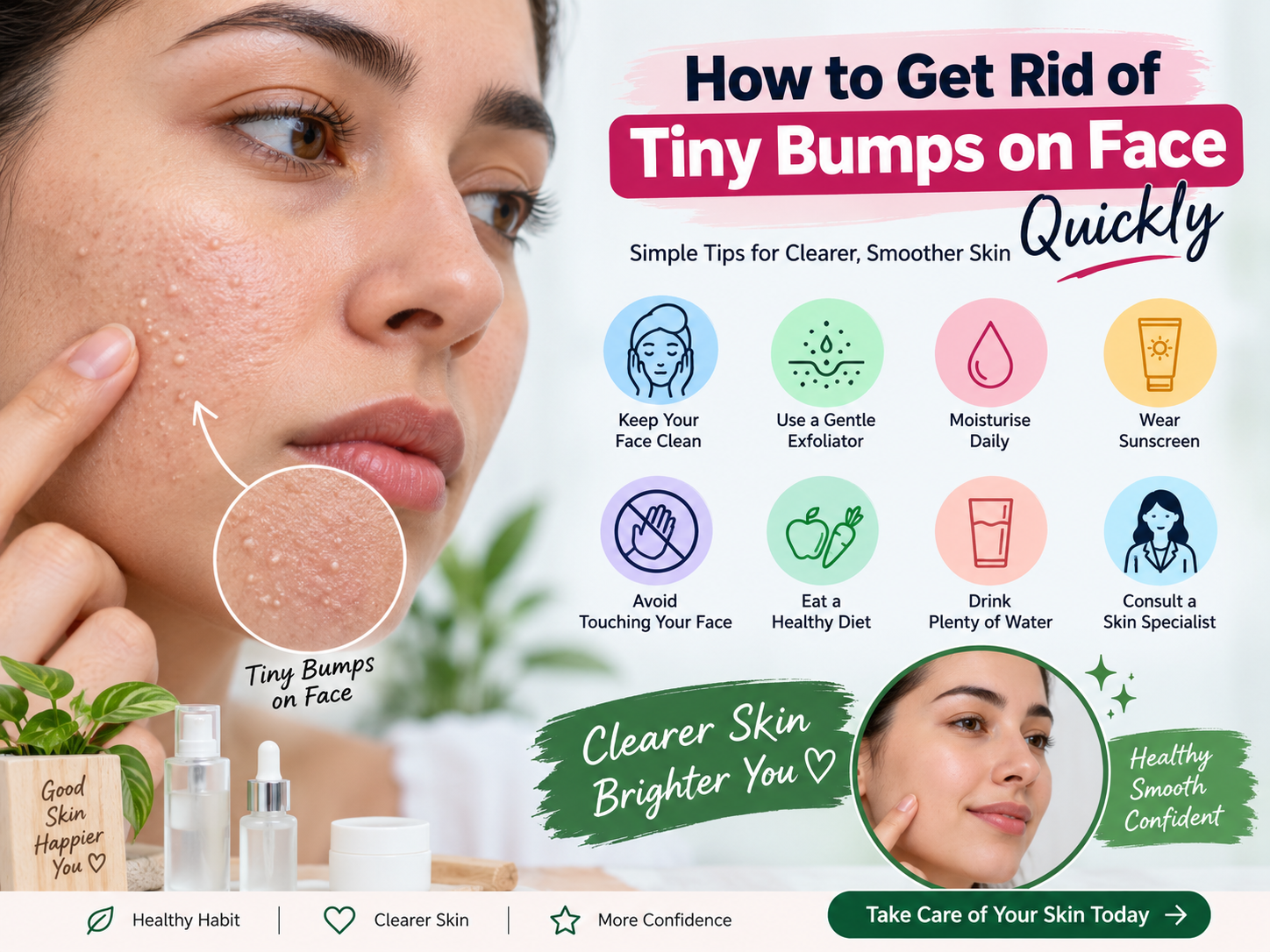
Tiny bumps on the face can be frustrating, especially when they appear suddenly or make the skin feel rough and uneven. If you are searching for how to get rid of tiny bumps on face quickly, the first step is understanding what is actually causing them. Not every small facial bump is acne. Similar-looking bumps can result from clogged pores, whiteheads, milia, folliculitis, irritation, or other skin conditions.
The fastest way to improve your skin is therefore not always to use a stronger product. It is to identify the likely cause, avoid practices that aggravate the skin, and use an appropriate skincare approach. Some bumps may improve with simple skin-care changes, while persistent, painful, itchy, or unusual bumps may require assessment by a dermatologist.
What Are Tiny Bumps on the Face?
Tiny facial bumps are small raised areas that can make the skin look rough, textured, or uneven. They may be skin-coloured, white, red, or slightly inflamed.
Their appearance can vary depending on the underlying cause.
For example, a tiny flesh-coloured bump may be a closed comedone, while a small, firm white bump could be milia. Small red or itchy bumps around hair follicles may have a different cause, such as folliculitis.
This is why treating every facial bump as acne is not always appropriate.
Acne itself develops when hair follicles become clogged with sebum and dead skin cells. Inflammatory changes can then produce different types of acne lesions, including whiteheads, blackheads, papules and pustules.
What Causes Tiny Bumps on the Face?
There isn’t one universal cause of tiny facial bumps. Common possibilities include:
1. Clogged Pores
When oil and dead skin cells accumulate inside hair follicles, pores can become blocked. Closed comedones may appear as small, flesh-coloured or whitish bumps.
2. Excess Sebum
Sebaceous glands produce sebum, an oily substance that helps protect the skin. Excess oil can contribute to clogged follicles and acne in susceptible people.
3. Dead Skin-Cell Buildup
When dead skin cells do not shed normally and accumulate within follicles, they can contribute to congestion and small bumps.
4. Milia
Milia are small, firm, usually white or yellowish bumps that can appear on the skin. They are different from ordinary acne and should not automatically be treated like pimples.
5. Folliculitis
Folliculitis involves inflammation or infection of hair follicles and can sometimes look remarkably similar to an acne breakout. It may also cause itching or discomfort.
6. Skincare or Haircare Products
Some cosmetics, sunscreens, moisturizers, or hair products may contribute to clogged pores in susceptible individuals. Choosing products labelled non-comedogenic can be helpful for people prone to acne.
7. Irritation
Over-exfoliation, aggressive scrubbing, frequent product changes, or irritating ingredients can make the skin barrier uncomfortable and may worsen the appearance of bumps.
8. Hormonal Changes
Hormonal changes can increase sebum production and contribute to acne, particularly during puberty and certain stages of adulthood.
How to Get Rid of Tiny Bumps on Face Quickly
If you want to know how to get rid of tiny bumps on face quickly, start with the basics rather than immediately using multiple strong products.
1. Identify What the Bumps Look Like
First consider:
- Are they white or skin-coloured?
- Are they red?
- Do they itch?
- Are they painful?
- Are they hard and pearly?
- Are they concentrated around hair follicles?
- Do they appear mainly on the forehead, cheeks, chin, or hairline?
The appearance and symptoms can provide useful clues, although they cannot replace professional diagnosis.
2. Use a Gentle Cleanser
Wash your face gently rather than aggressively scrubbing the bumps.
Dermatology guidance recommends gentle cleansing and avoiding rough scrubbing because excessive friction can aggravate acne-prone skin.
3. Avoid Picking or Squeezing
Trying to physically remove tiny bumps can cause irritation and increase the risk of marks or scarring.
This is particularly important when you are unsure what the bump actually is.
4. Review Your Skincare Products
Look at the products you use regularly:
- Cleanser
- Moisturizer
- Sunscreen
- Makeup
- Hair oil
- Styling products
If bumps are concentrated around the forehead or hairline, hair products may be worth considering as a possible contributor.
5. Don’t Over-Exfoliate
Using several exfoliating products at once does not necessarily make bumps disappear faster. Excessive exfoliation can irritate the skin and make texture appear worse.
6. Choose Non-Comedogenic Products
If clogged pores are contributing to the bumps, products labelled non-comedogenic may be preferable because they are formulated to be less likely to block pores.
7. Give Your Skin Time
The word “quickly” can be misleading.
Some irritation-related bumps may improve after the trigger is removed, while acne often requires consistent treatment over weeks. NHS guidance notes that acne treatments can take several weeks or longer to show their full effect.
Are Tiny Bumps Always Acne?
No.
This is one of the most important points to understand.
Acne is one possible cause, but several other conditions can resemble acne.
The American Academy of Dermatology specifically notes that conditions such as folliculitis and perioral dermatitis can resemble acne, and accurate identification matters because treatment can differ.
Tiny Bumps vs Common Causes
| Appearance or symptom | Possible explanation |
| Small white or flesh-coloured bumps | Closed comedones |
| Black dots within pores | Blackheads |
| Small red, tender bumps | Acne papules |
| Firm pearly white bumps | Milia |
| Similar-looking itchy bumps around follicles | Folliculitis may be possible |
| Bumps around the mouth with irritation | Another acne-like condition may be possible |
| Rough, persistent follicular texture | Could have a non-acne cause |
This table is educational, not a diagnostic test.
How to Identify Tiny Bumps on Different Parts of the Face
Tiny Bumps on the Forehead
Small forehead bumps can sometimes be associated with clogged pores or acne. Hair products can also be relevant when bumps appear close to the hairline.
Instead of immediately adding another acne product, consider whether your skincare and haircare routine has recently changed.
Tiny Bumps on the Cheeks
Cheek bumps can have several possible causes, including acne, clogged pores, irritation, or other skin conditions.
Think about products that regularly contact your cheeks, including moisturizers, sunscreen, makeup and hair products.
Tiny Bumps Around the Hairline
The hairline deserves particular attention because hair products can transfer onto nearby skin. If the bumps are concentrated specifically around this area, reviewing haircare products may be useful.
Tiny Bumps vs Milia vs Acne vs Folliculitis
One of the biggest mistakes people make is assuming that every tiny facial bump is acne.
Acne
Acne can include whiteheads, blackheads, papules, pustules, nodules and cysts. It develops from processes involving clogged follicles, sebum and inflammation.
Milia
Milia generally appear as small, firm, white or yellowish bumps and are not simply ordinary pimples.
Folliculitis
Folliculitis affects hair follicles and can resemble an acne breakout. It may be itchy, painful or associated with redness.
Why the Difference Matters
Different causes may require different approaches. The AAD emphasizes that what appears to be acne can sometimes be another condition, which is why an accurate assessment can be important when the problem persists.
What Can Make Tiny Facial Bumps Worse?
Trying to remove bumps too aggressively can sometimes backfire.
Avoid:
- Scrubbing the skin harshly
- Picking or squeezing bumps
- Applying too many active ingredients
- Frequently changing your skincare routine
- Using heavy products that may clog pores
- Washing your face excessively
- Using DIY ingredients that irritate the skin
- Treating an unidentified bump as acne without considering other possibilities
For acne-prone skin, excessive scrubbing and picking can worsen the problem and increase the risk of marks or scarring.
Can Skincare Products Cause Tiny Bumps?
They can contribute to breakouts in some people.
Pay particular attention to products that are applied frequently or remain on the skin for long periods.
Potentially relevant products include:
- Heavy moisturizers
- Makeup
- Sunscreen
- Hair oils
- Styling products
- Thick cosmetic products
However, you should not assume that a particular ingredient is automatically responsible. Skin reactions are individual, and persistent bumps may have another underlying cause.
Can Diet Cause Tiny Bumps or Acne?
Diet and acne are often discussed online, but the relationship is more complicated than simply saying that one particular food “causes acne.”
Some evidence suggests that certain dietary patterns may influence acne in some people, while research is ongoing. NIAMS notes that diet may worsen acne for some people but does not present diet as the sole cause of acne.
Therefore, avoiding individual foods without understanding your overall skin pattern may not solve the underlying problem.
How Long Does It Take for Tiny Bumps to Go Away?
There is no single timeline because tiny bumps are not one specific skin condition.
The timeframe can depend on:
- The underlying cause
- How long the bumps have been present
- Whether the skin is irritated
- Whether pores are clogged
- Whether inflammation is present
- The skincare or treatment approach being used
Acne treatments commonly require consistent use over several weeks rather than producing overnight results. NHS guidance notes that acne treatment may take months to produce noticeable improvement, while the AAD notes that treatment for some blackheads and whiteheads may require six to eight weeks before assessing the response.
So, if someone searches how to get rid of tiny bumps on face quickly, the safest answer is that “quickly” depends on the cause.
When Should You See a Dermatologist?
Consider professional evaluation if:
- The bumps persist or repeatedly return.
- They become painful or significantly inflamed.
- They are very itchy.
- They are spreading.
- You develop scars or persistent dark marks.
- Basic skincare changes do not help.
- You are unsure whether the bumps are acne.
- The appearance changes suddenly or seems unusual.
A dermatologist can examine the skin and determine whether the bumps represent acne or another condition. NIAMS notes that diagnosis can involve examining the type of skin lesions and considering symptoms, history and other factors.
How a Dermatologist Determines the Cause
A dermatologist generally begins by examining the skin and considering factors such as:
- The appearance of the bumps
- Location
- Duration
- Symptoms such as itching or pain
- Current skincare products
- Medications
- Relevant medical history
- Pattern of recurrence
This distinction is important because not every acne-like bump should receive the same treatment.
Frequently Asked Questions
What is the fastest way to get rid of tiny bumps on the face?
There is no single fastest method because the appropriate approach depends on the cause. Gentle skincare, avoiding irritation and identifying the type of bump are better starting points than aggressively squeezing or scrubbing the skin.
Why do I suddenly have tiny bumps on my face?
Possible explanations include clogged pores, changes in skincare or haircare products, acne, irritation, folliculitis and other skin conditions.
Are tiny bumps on the forehead acne?
They can be, but not every forehead bump is acne. Closed comedones, product-related congestion and other conditions can have a similar appearance.
Should I squeeze tiny bumps on my face?
Generally, squeezing is not recommended. Picking or squeezing can irritate the skin and may increase the risk of marks and scarring.
Are tiny white bumps always milia?
No. Whiteheads and other small lesions can also look white or pale. Their appearance, texture and location can help a professional distinguish between them.
Can skincare products cause tiny bumps?
Some products may contribute to clogged pores or irritation in susceptible people. Reviewing recently introduced products can help identify possible triggers.
Why are my tiny facial bumps not going away?
Persistent bumps may continue because the underlying cause has not been identified, the skin is repeatedly exposed to an irritant, or the bumps are not actually acne. Professional assessment may be appropriate if they persist.
Can tiny bumps turn into acne?
If the bumps are actually early acne lesions or clogged follicles, they may develop into other acne lesions. However, not every tiny facial bump is part of the acne process.
Can stress cause tiny bumps on the face?
Stress does not necessarily create acne from nothing, but it can contribute to worsening acne in some people. NIAMS lists stress among factors that may make acne worse.
How can I prevent tiny bumps from coming back?
Use a consistent, gentle skincare routine, avoid picking, review products that may clog pores or irritate the skin, and seek professional advice when bumps are persistent or recurrent.
Key Takeaway
If you’re searching for how to get rid of tiny bumps on face quickly, don’t assume that stronger skincare or aggressive exfoliation is the answer.
The most useful first step is identifying what type of bumps you have. Acne, milia, folliculitis, clogged pores and irritation can look similar but may have different causes and require different approaches.
Gentle cleansing, avoiding picking and choosing suitable skincare products can help support clearer skin. If the bumps persist, become painful or itchy, leave marks, or you are uncertain about their cause, a dermatologist can provide a more accurate assessment.
Medical review: Dr. Hera Tabassum
Recommended References
1. American Academy of Dermatology — Acne Causes
American Academy of Dermatology — What Causes Acne?
2. American Academy of Dermatology — Acne Diagnosis & Treatment
American Academy of Dermatology — Acne: Diagnosis and Treatment
3. American Academy of Dermatology — Folliculitis
American Academy of Dermatology — Folliculitis
4. NIAMS — Acne Overview
NIAMS — Acne: Overview, Symptoms & Causes
5. NIAMS — Acne Diagnosis & Treatment
NIAMS — Acne: Diagnosis, Treatment, and Steps to Take